

1 Months
I worked on this project "Bugdrop", a web-based issue reporting platform that unified bug tracking, feature requests, and client communication into a single workflow. By integrating directly with existing project management tools, the platform improved collaboration, reduced communication overhead, and created a more transparent experience for both clients and internal teams.
As our client base grew, managing bugs, feature requests, feedback, and design changes across multiple communication channels became increasingly difficult. Clients reported issues through emails, chat messages, and various project discussions, creating fragmented workflows and making issue tracking inefficient for both clients and internal team.
To address this challenge, we designed and built Bugdrop - a lightweight bug reporting platform that centralized issue reporting, streamlined communication, and integrated directly with our existing project management workflows.
I was responsible for designing the user experience, workflows, interface system, and interactions that supported both client-facing and internal operational needs.
As the number of projects, clients, and feature requests increased, our existing communication processes became difficult to manage.
Several challenges were identified:
Clients used multiple channels to report issues.
Feedback and bug reports were often incomplete or inconsistent.
Teams struggled to maintain visibility across projects.
Communication delays increased due to fragmented workflows.
There was no centralized place for clients to track progress or provide feedback.
The existing process created friction for both clients and internal teams, resulting in reduced efficiency and unnecessary back-and-forth communication.
Why We Built Our Own Solution:
Instead of adopting third-party bug reporting tools, we decided to build an internal platform tailored to our existing workflows.
This decision was driven by several factors:
Existing tools introduced unnecessary complexity.
Many solutions included features we did not require.
Additional licensing costs provided limited value.
Our team already relied heavily on ClickUp for project management.
We wanted full control over the user experience and workflow design.
By building our own solution, we could create a simpler and more focused experience while integrating directly into our internal processes.
I worked with internal teams to understand:
How issues were currently reported
Where communication breakdowns occurred
What information developers required
How everyone tracked progress
Workflow Mapping: I mapped the journey of an issue from submission to resolution, identifying opportunities to improve visibility and reduce friction.
Information Architecture: The platform was organized around:
Issue reporting
File attachments
Status tracking
Communication updates
Project organization
Interface Design: The interface focused on simplicity, clarity, accessibility, responsive behavior, inspired by notion interfaces.

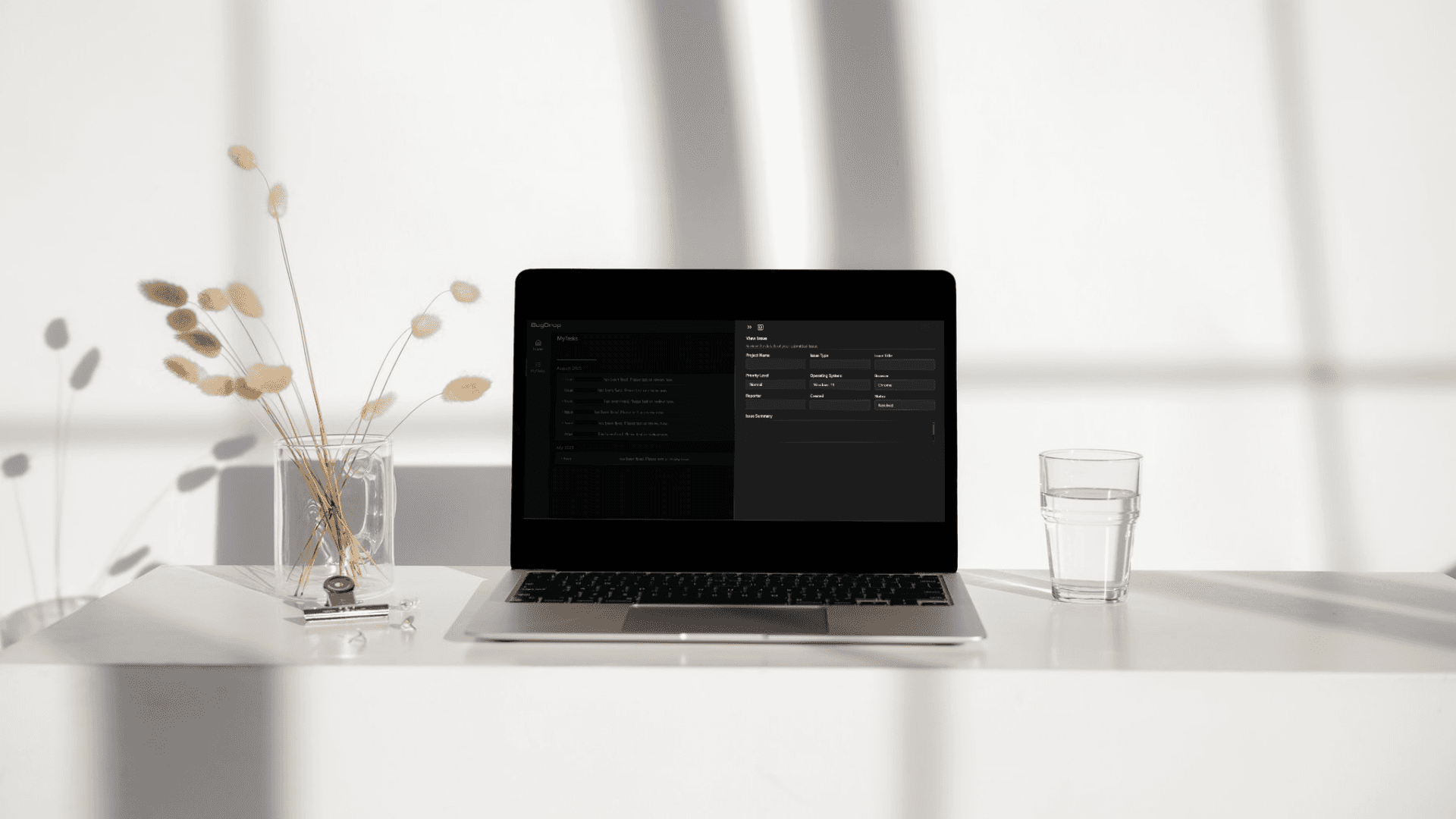
Bugdrop provided a centralized experience for issue reporting and communication.
Key features included:
Structured Issue Reporting: Users could submit detailed bug reports, feature requests, and feedback using guided forms.
File Attachments: Support for screenshots and file uploads improved issue clarity and reduced back-and-forth communication.
Status Tracking: Clients could monitor issue progress and remain informed throughout the resolution process.
ClickUp Integration: Direct integration with ClickUp ensured seamless synchronization with internal project workflows.

This project strengthened my understanding of workflow optimization, internal product design, and designing experiences for both technical and non-technical users.